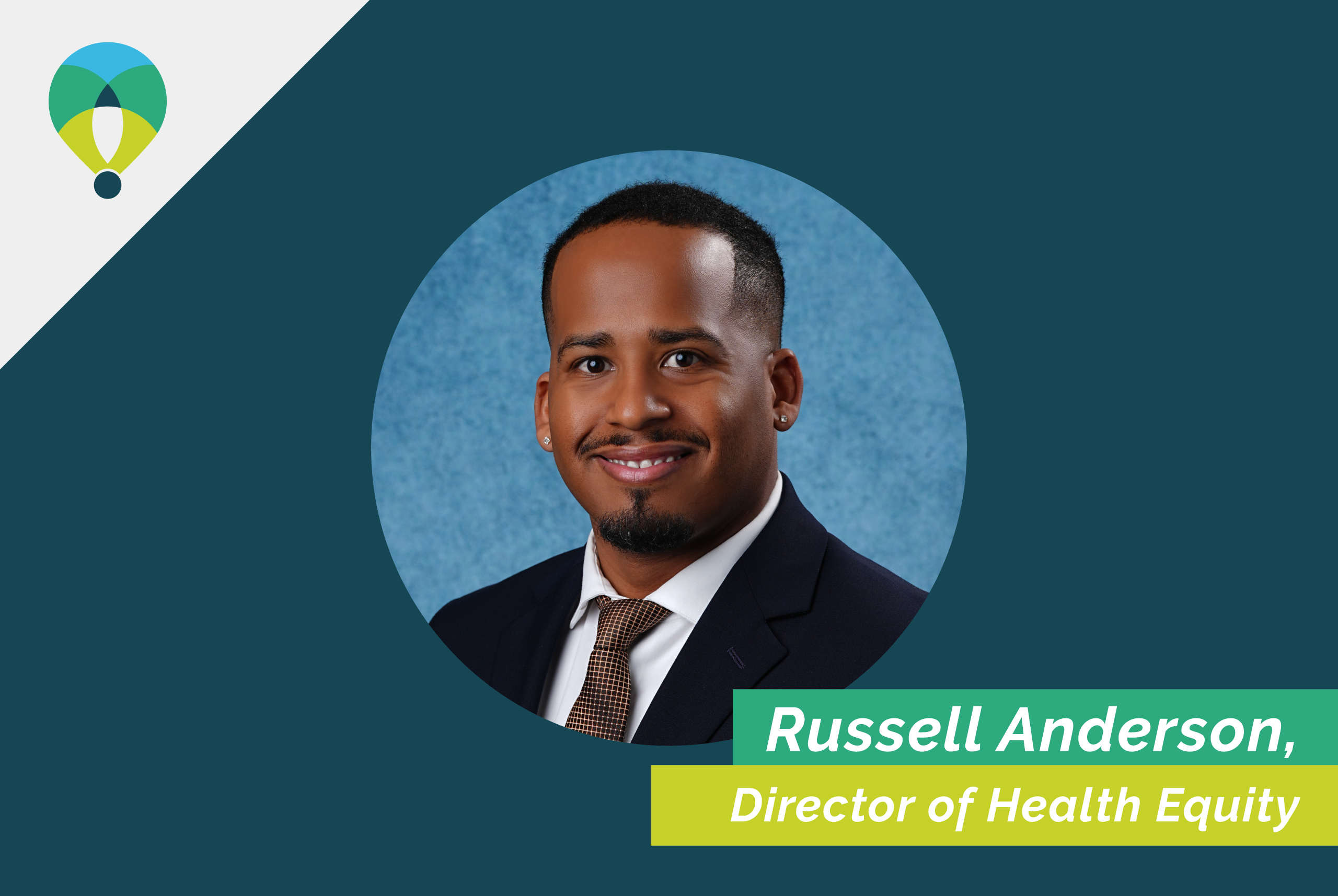
Equity is one of our core values at the Children’s Services Fund—we champion it by celebrating differences, valuing lived experiences, and allocating resources for all children to thrive. This Black History Month, we’re reflecting on the importance of learning from our past as we strive to serve our community well in the future.
For this month’s blog, we had a conversation with Russell Anderson, Director of Health Equity at the CSF, about the importance of Black History Month, health equity in our community, and the role our organization plays in supporting community partners making an impact in our community.
What does Black History Month mean to you, and why do you think it remains important today?
My story begins when I was adopted by a white family in Texas in the 1980s. My birth mother is Mexican American, and my birth father is Black. Growing up in a white family, my mom worked hard to help me understand my roots and what they meant for me. She grew up in the South and experienced segregation, so she wanted to make sure I learned about the Black American experience, Black culture, and Black history.
I believe it’s important to recognize the people who have shaped American culture and our society. We all want to belong somewhere, to be accepted, and to have a voice in the places we call home. Learning our history—both the good and the uncomfortable parts—helps us understand each other and our shared humanity.
Black History Month still matters today because new generations deserve to learn these stories. Now that I’m a father, I try to pass down the same lessons my mom gave me. My kids are multi‑racial, and I help them learn about both the Latino and Black experiences. Their mom is white, and she shares her family’s story with them too. Together, we help them understand where they come from and the strength in all parts of their identity.
How have your experiences shaped your passion for equity, health, and opportunities for children and families?
My passion for justice and public service comes from my own experiences growing up in the child welfare system. I was part of an interracial family, spent time in placements outside my home, and had cousins placed with us. All of these experiences shaped who I am and helped me understand what families go through every day. I feel lucky to have a career where I get to serve others, and I bring those personal experiences into this role—especially when we think about people’s goals, the barriers they face, and how they move through the systems around them.
In the end, equity is about improving the systems that affect our lives. It can feel overwhelming when you think about all the challenges our communities face, but one thing I’ve learned is that people are incredibly resilient. At CSF, our work is about supporting that resilience. We use an equity lens to help our partners make the biggest impact possible, so communities can keep growing and reaching for their goals.
In your role, how would you define “equity” when it comes to children’s emotional and behavioral wellbeing?
When I think about how the CSF defines equity—celebrating differences, honoring lived experiences, and removing barriers so all kids can thrive—I think about what that means for children’s emotional and behavioral health. First, kids need to feel safe and like they belong. That means meeting them where they are, whether that’s at school or in their homes. We hope every child has at least one stable, caring adult in their life, besides their parents—someone who sees them every day, understands them, and doesn’t judge them.
Another important piece is making sure every child and family gets fair and respectful treatment that fits their specific situation. Our list of community partners grows each funding cycle, and we’re truly grateful for them. They work so hard to help families reach their goals by creating steady, reliable support. As we look at improving systems—especially for people facing barriers—we want to build systems that reduce harm and truly serve the people who depend on them.
Lastly, children and families need quick, appropriate help when life becomes overwhelming. That means making support easy to find and removing structural, cultural, and procedural barriers that stand in the way. Families should know where to turn, and the people who serve them should be ready to offer the best support possible.
What are some systemic barriers that disproportionately affect Black children and families when it comes to accessing emotional and behavioral support?
One thing we learned from our Children’s Services Assessment is that services need to truly respond to the community. That means making sure providers respect the cultural values, languages, and lived experiences of the children and families they serve. These things have a real impact on health equity, and closing those gaps is extremely important.
One example is the lack of Black service providers who reflect the communities they work in. This gap has been around for a long time, and it affects how families engage with the care system. When people have experiences that don’t feel accepting or understanding, it can feel harmful and make them less willing to get support. Having providers who look like you or share similar life experiences can make a huge difference.
I mentioned this earlier, but it’s worth saying again: it’s important to meet people where they are—both figuratively and literally. Figuratively means understanding that people start from different places because of things like racism and marginalization. Literally means going to where families already are, because transportation is a constant barrier in many Black communities. Since we’re not allowed by statute to fund transportation costs, supporting Academic Core funding continues to be a major priority for CSF. This helps us offer services in the places where children and families already spend their time.
How does honoring Black history help inform or strengthen the CSF’s commitment to equity today?
Black History Month is important to CSF because it helps us pause and recognize the many ways Black Americans have shaped our country. When we listen to people’s stories and dreams, we learn how to better support them. If we want real justice, we have to understand why certain rules were created, how they affect people today, and how we can fix the harm they still cause. Knowing our history helps us understand what needs to change.
At CSF, one way we’re working toward equity is by learning how to push back against the effects of criminalized poverty. Our team is going through a training called SkinDEEP, and it shows how racism and discrimination are closely linked to poverty. Too often, the challenges that come from poverty are mistaken for neglect or harmful behavior. Because of this, many Black children end up in the child welfare system when they shouldn’t have to. This training helps us see those patterns more clearly so we can do better for families.
What role do trusted community partners play in supporting children’s emotional and behavioral wellbeing, particularly in historically marginalized communities?
Our community partners are the ones doing the hard work every day. We’re lucky that we get to work with them and help direct resources to support children and their families. But at the end of the day, they’re the ones showing up, meeting needs, and keeping things moving. Without them, the CSF wouldn’t be able to make any real impact. Their missions and strengths are what make the difference.
This past year has been tough for many of our partners. Federal funding changes have made their work even harder, but the aspirations in our communities haven’t gone away. That’s why we’ve shifted our role. Instead of being just a funder, we’re also trying to be a support system—someone they can lean on while they keep doing their important work.
During a recent team retreat, we were asked to fill in the blanks: “The CSF is like ______, because we give ______.” My group said CSF is like a lighthouse because we provide hope and help organizations stay on course. That image really stuck with me. We wish we could support every organization and meet every dream, but we know that the support we can offer helps many people keep going and continue the work they’re passionate about.
What does real progress look like to you—not just during Black History Month, but throughout the year?
To me, real progress means changing the systems that create injustice. It isn’t about blaming people—sometimes unfair things happen even when no one means for them to. But the harm is still real, and the systems that hurt people need to be fixed. Any time we pause to recognize something important happening in the world, it gives us a chance to look at what’s broken and start making it better.
Many nonprofits—including CSF—dream of a world where our work isn’t needed anymore. It would be amazing if every child and every family already had what they dreamed to grow and thrive. Kids are the next generation, and they’re going to shape our communities. We want them to be healthy, confident, and strong so they can carry that responsibility forward.